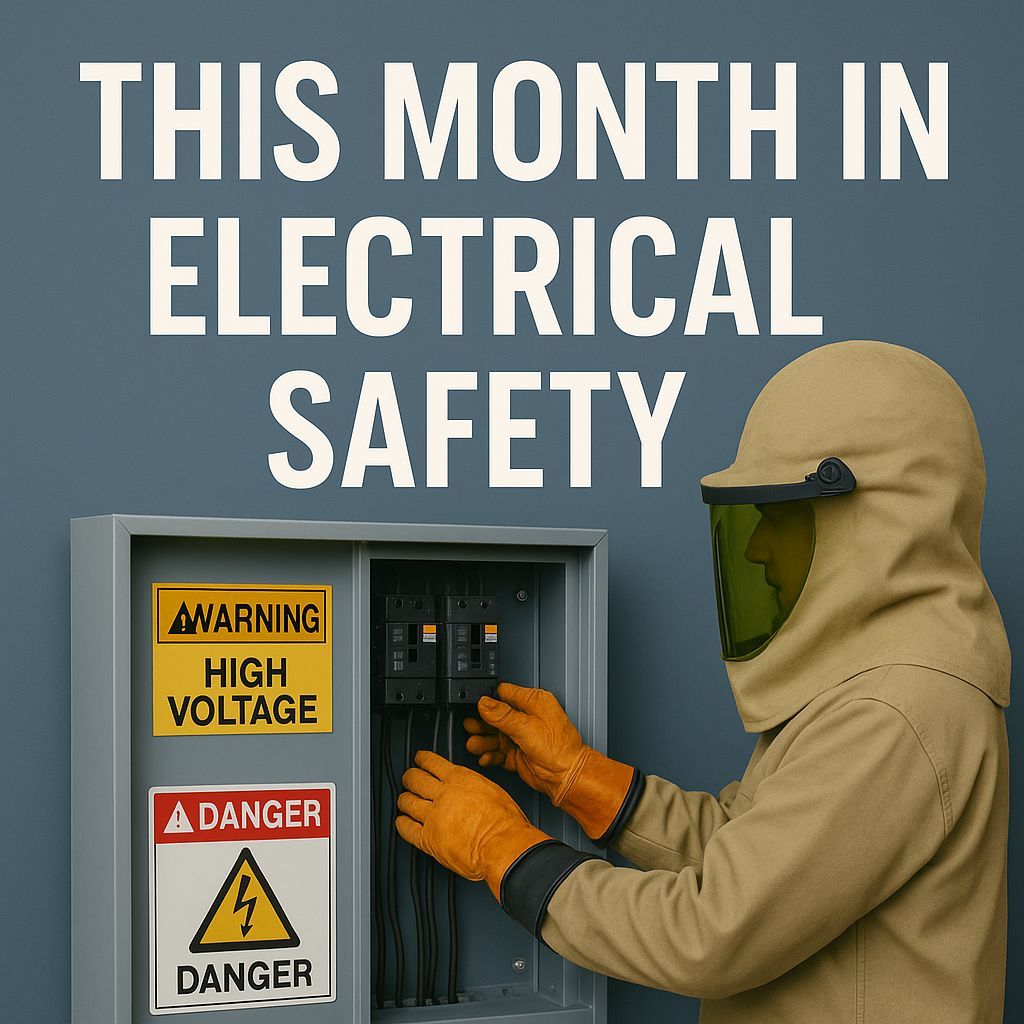
This Month in Electrical Safety: September/October 2026 Edition
Welcome back to This Month in Electrical Safety, where we connect safety developments with the decisions facing American manufacturers, facility managers, equipment builders, and environmental health and safety teams.
September and October bring a useful combination: emergency preparedness, renewed attention to everyday workplace hazards, and a national conversation about battery charging. For industrial facilities, these subjects connect directly to equipment acceptance, maintenance planning, and keeping production schedules from outrunning safety decisions.
This edition examines recent U.S. outreach alongside established requirements that deserve attention before year end. We will also explain where an electrical equipment field evaluation can help when a custom machine, relocated tool, or modified assembly raises approval questions.
September’s Workplace Reminder: Start With the Basics
On September 1, North Dakota Workforce Safety & Insurance published an electrical safety message focused on hazards that can disappear into the background of a busy workplace. Its reminders included inspecting cords and tools, keeping panels accessible, avoiding overloaded outlets, and identifying who is qualified to perform electrical work. [1]
These are familiar subjects. That is precisely why they deserve another look. A damaged cord can become part of the scenery, and a supposedly temporary extension cord can quietly celebrate its third anniversary.
For facility teams, the practical response is a documented walk-down with someone responsible for closing each finding. Include production areas, maintenance shops, laboratories, shipping stations, and temporary workspaces.
Ask employees where they have improvised power connections or worked around unreliable equipment. Those answers can reveal problems that never appear on a scheduled inspection checklist.
The goal is to find small defects before a routine task becomes an emergency. Assign owners, establish correction dates, and verify completion. A photograph of a damaged receptacle is useful evidence, but the repaired installation is what actually protects people.
September Preparedness: Plan for Losing Power
September is National Preparedness Month, an annual U.S. reminder to prepare homes, businesses, and communities for emergencies. For industrial operators, electrical resilience belongs in that discussion alongside communications, evacuation, and supply continuity. [2]
Start by identifying what happens when normal power disappears. Which processes stop safely? Which ventilation systems, alarms, controls, or cooling systems require continued operation? Who decides when equipment may restart?
Emergency planning should identify those dependencies before an outage turns them into surprises. A generator’s presence does not answer every question about capacity, connections, operating procedures, or employee responsibilities.
The American Red Cross warns against powering building wiring by plugging a generator into a wall outlet. It also explains that a permanent connection requires an electrician and a properly installed transfer switch meeting applicable codes. Portable generators also present carbon monoxide, shock, and fire hazards. [3]
For facility managers, the takeaway is straightforward: have qualified professionals review the backup power arrangement and document the operating plan. Include contractors and temporary equipment in that review. The worst time to discover an undocumented connection is when everyone is waiting for production to resume.
October’s Fire Prevention Message: Charging Deserves Attention
Fire Prevention Week ran October 4 through 10, 2026. NFPA’s campaign emphasized everyday charging habits under the theme “Charge Into Fire Safety: Safe Charging Is a Superpower.” One central message was to use the charger supplied with a device or one approved by its manufacturer. [4]
Although the campaign addresses community fire prevention, American workplaces have plenty of reasons to participate. Cordless tools, portable instruments, laptops, and employee devices all bring charging activity into facilities.
Our recommendation is to make charging locations part of the facility walk-down. Identify the devices being charged, confirm that chargers match manufacturer instructions, and determine who handles reports of damaged equipment.
Avoid letting a convenient countertop become an unmanaged charging station surrounded by packaging and paperwork. Give employees a clear reporting route when a battery or charger appears damaged or behaves abnormally.
Facilities using larger industrial battery systems should arrange a review appropriate to those systems and their installation. A consumer awareness campaign is a useful conversation starter, but engineering decisions require equipment specific information and applicable requirements.
Unlisted Equipment: Resolve the Approval Path Early
New production tools often arrive with impressive capabilities and incomplete compliance records. A project team may have drawings, component certificates, and a successful factory demonstration without a clear answer about acceptance of the finished assembly.
An electrical equipment field evaluation assesses a specific piece of equipment against applicable safety criteria. The evaluation scope, required corrections, documentation, and labeling depend on the equipment and the authority reviewing it.
For planning purposes, gather the equipment nameplate, electrical schematics, installation instructions, component information, and a description of modifications. Send these materials before the installation deadline becomes tomorrow morning.
Also identify the authority having jurisdiction, or AHJ, and confirm which evaluation organizations and reports it accepts. Ask what must be submitted, when inspection is expected, and whether the equipment category introduces additional restrictions.
Keep the local approval discussion distinct from federal workplace requirements. OSHA’s definition of acceptable equipment contains specific approval pathways and conditions; local acceptance alone should not be treated as automatic satisfaction of every OSHA obligation. [5]
The commercial lesson is simple: make the acceptance plan part of purchasing and installation. Scheduling an electrical equipment field evaluation early creates time to investigate deficiencies, obtain replacement parts, and coordinate corrective work before startup pressure takes over.
Arc Flash Protection: Review the Work, Not Just the Label
OSHA’s published arc flash guidance explains hazard assessment and protective measures for employees working with electrical equipment. It remains relevant to fall maintenance planning, even though the guidance itself is not a newly announced September or October rule. [6]
A label is one communication tool. It cannot decide whether a task should proceed, whether equipment conditions have changed, or whether the assigned employee has the necessary qualifications.
Before planned work, ask whether the available assessment reflects the actual system. Changes to transformers, protective devices, operating configurations, and connected equipment are reasons to have the analysis reviewed by qualified personnel.
Maintenance condition also belongs in the conversation. Protective equipment and procedures should be selected for the hazards of the task, with appropriate attention to equipment condition and the work environment.
For managers, a useful planning question is: what evidence supports the decision to perform this task this way? If the answer is simply that the label has always been there, the review is unfinished.
Use the fall planning window to resolve those gaps before contractors arrive and the outage clock starts ticking.
Shutdown Season: Verify Isolation Before Maintenance
OSHA’s electrical work practice rule generally requires exposed live parts to be de-energized before employees work on or near them, subject to specified exceptions. It also requires a qualified person to verify deenergization using appropriate testing. [7]
That requirement deserves careful attention when equipment has multiple supplies, stored electrical energy, or circuits that can remain energized after the main disconnect opens.
Plan the isolation steps around the actual machine. Identify the relevant sources, establish responsibility, and make sure the written procedure matches the installation employees will encounter.
Separately, OSHA’s hazardous energy standard addresses covered servicing and maintenance involving unexpected startup or release of stored energy. It includes periodic inspection requirements for energy control procedures. Electrical exposure requirements and machinery energy control requirements must be applied to their respective hazards. [8]
For project teams, this is also a documentation opportunity. When an electrical equipment field evaluation identifies disconnecting or marking deficiencies, carry the resulting corrections into maintenance instructions and training.
Keep electrical isolation and machinery servicing procedures consistent as equipment changes. A new drawing in engineering’s folder does little good if maintenance is still following an obsolete procedure posted beside the machine.
Before Year End: Build an Equipment Acceptance File
OSHA requires electrical equipment to be approved and free from recognized hazards likely to cause death or serious physical harm. Its rules also address installation and use according to listing or labeling instructions, interrupting ratings, and protection against deteriorating conditions. [9]
Those requirements support a practical management habit: keep the evidence for each significant equipment installation together.
We recommend an acceptance file containing the current equipment identity, drawings, installation information, relevant reports, correction records, and correspondence with reviewing authorities. Record who approved changes and which documents were superseded.
For equipment being moved or modified, review that file before assuming the previous installation answers every question at the new location.
This is especially useful when purchasing, engineering, maintenance, and safety teams hold different pieces of the project history. One accessible record helps everyone understand what was reviewed and what remains unresolved.
Try a simple handoff exercise: ask someone outside the project to locate the current drawings, identify outstanding corrections, and explain the next approval step. If that takes several phone calls, improve the file before the next installation. Clear records help a replacement project manager or maintenance supervisor make informed decisions without reconstructing months of conversations from scattered emails.
This Concludes Another Month in Electrical Safety
September’s preparedness reminders and October’s charging campaign offer practical starting points for safer U.S. facilities. The next step is translating awareness into assigned work, verified corrections, and usable records.
At Lewis Bass International Engineering Services, we help project teams address equipment safety questions before they disrupt installation and production. If your next project involves unlisted or modified equipment, contact Lewis Bass to discuss an electrical equipment field evaluation and the acceptance requirements for your location.
Until next month, stay proactive, stay compliant, and stay grounded.