What situations can lead to machinery being unlisted and used in the field without evaluation?
The machine arrived on a Tuesday.
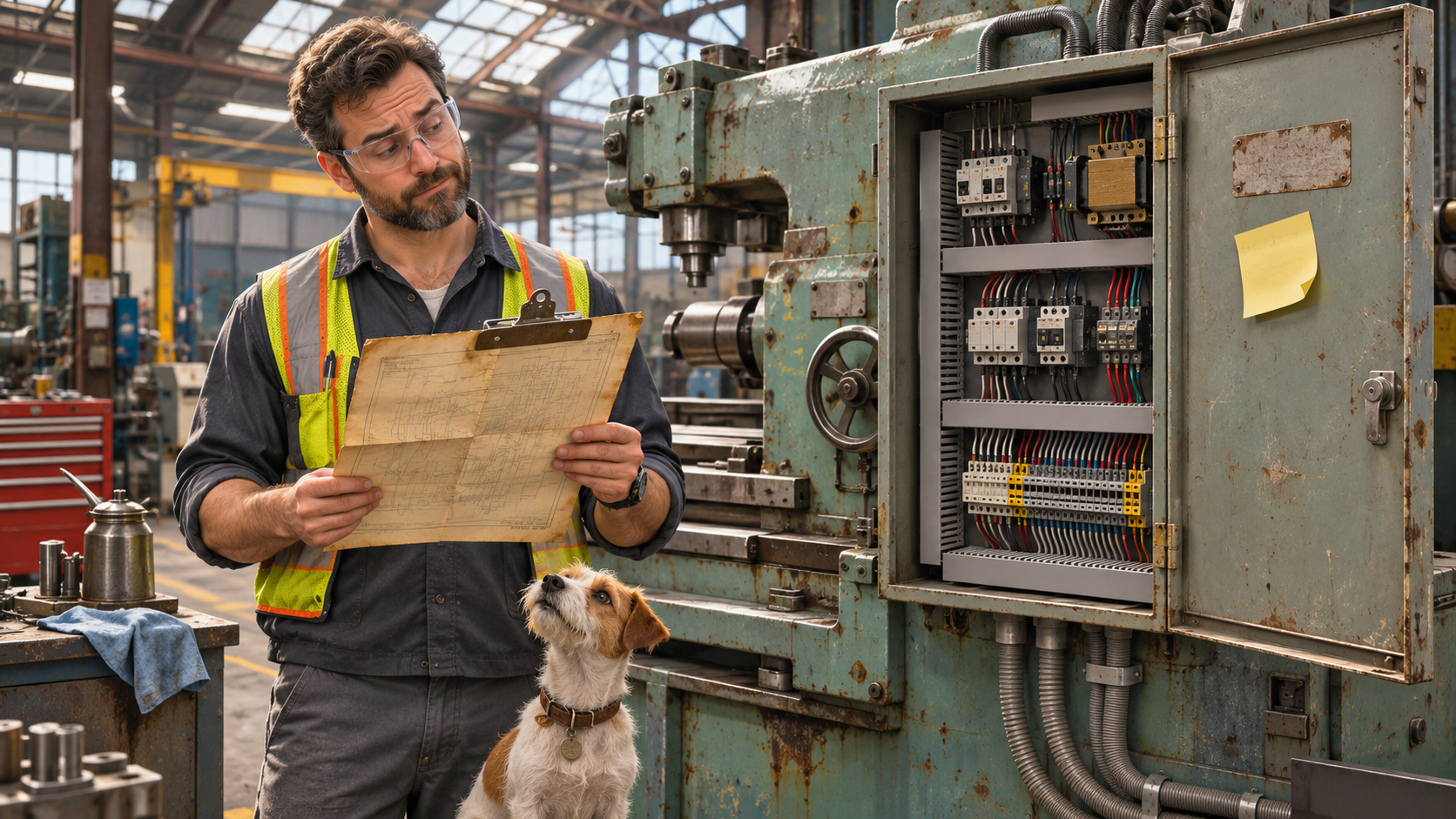
By Wednesday, it was making parts. By Friday, everyone had forgotten to ask whether it carried a certification mark. Three years later, someone opens the electrical cabinet and finds a wiring diagram dated 1998, two unlabeled conductors, and a handwritten note that reads “ask Dave.” Dave retired in 2014.
That’s one way machinery ends up unlisted and used in the field. The machine does its job, production moves on, and the question of electrical approval sits quietly in the background. Here are three familiar reasons a field evaluation gets put off, and what an evaluation can tell you that years of production haven’t.
1. You bought it used, and it was already unlisted
The case against a field evaluation. The seller ran the machine for fifteen years. You watched it cycle before buying it. It came with spare tooling and half a manual. Why spend part of those savings evaluating a machine that already has a respectable résumé?
The case for a field evaluation. A successful demo tells you the machine can make a part. It leaves questions about whether the electrical equipment is suitable for your installation. A previous owner may have replaced a motor, swapped a control panel, or installed a drive after the original failed. Your facility may have more available fault current than the old shop did. That matters when determining whether the equipment can safely withstand or interrupt a fault.
An evaluator can review the equipment as installed, check items such as bonding, overcurrent protection, and electrical ratings, and document deficiencies for correction. That gives maintenance something more useful than Dave’s note. If you’re still shopping, ask for photos of the machine nameplate and any certification marks, plus the electrical drawings and modification history. Those records can help you scope the work before the riggers show up.
2. The city has never asked you to field evaluate it
The case against a field evaluation. An inspector has been in the building. The permit was signed off. The machine was right there. Surely someone would have said something by now.
The case for a field evaluation. Start by finding out what that inspection covered. A permit signoff may document the scope of the permitted work, such as a new feeder or disconnect. The machine’s internal wiring and components may have been outside that scope. Ask the local authority having jurisdiction what equipment approval records it has and what it accepts for that specific installation.
For equipment that is unlisted and used in the field, there’s also a workplace electrical approval question. OSHA’s general industry electrical rules require covered equipment to be approved as defined in 29 CFR 1910.399. That definition sets out specific ways equipment can qualify. If the local authority calls for a field evaluation, confirm which providers and documentation it accepts before booking one. A phone call early in the project is considerably easier to schedule than an emergency visit the day before startup.
3. The insurance company never asked whether your machines were listed
The case against a field evaluation. The insurer asked about sprinklers, roof age, and whether anyone does hot work. The application went through. The premium cleared. The machine, having received no questionnaire of its own, carried on making brackets.
The case for a field evaluation. The questions on an insurance application tell you what information the insurer requested. For coverage questions, review the policy and ask your broker or carrier about the specific equipment. An electrical field evaluation answers a different question. What electrical deficiencies, if any, need to be addressed on this machine at this site?
For example, an evaluator might find a replacement enclosure with openings that expose live parts, or a machine with a short-circuit current rating below the available fault current. Either finding gives your team something concrete to investigate and correct. Keep the evaluation report and any resulting field label information with the asset records so the next maintenance lead can see what was evaluated and which corrections were documented.
Start with the machine in front of you
When machinery is unlisted and used in the field, start by gathering the nameplate photos, electrical drawings, and whatever approval records you can find. If the approval status is unclear, ask what evidence applies to the equipment in its current configuration and location. Where a field evaluation is appropriate, the evaluator can explain the scope, the findings, and what needs to happen before a field label can be applied.
At Lewis Bass International Engineering Services, we help facilities work through those questions for industrial equipment. If you have an older machine with a murky paper trail, tell us what it is, where it’s installed, and what paperwork came with it. We can take it from there. Dave can enjoy his retirement.